
Dave's ASH Archive - World Politics
Last Updated: 9/26/22
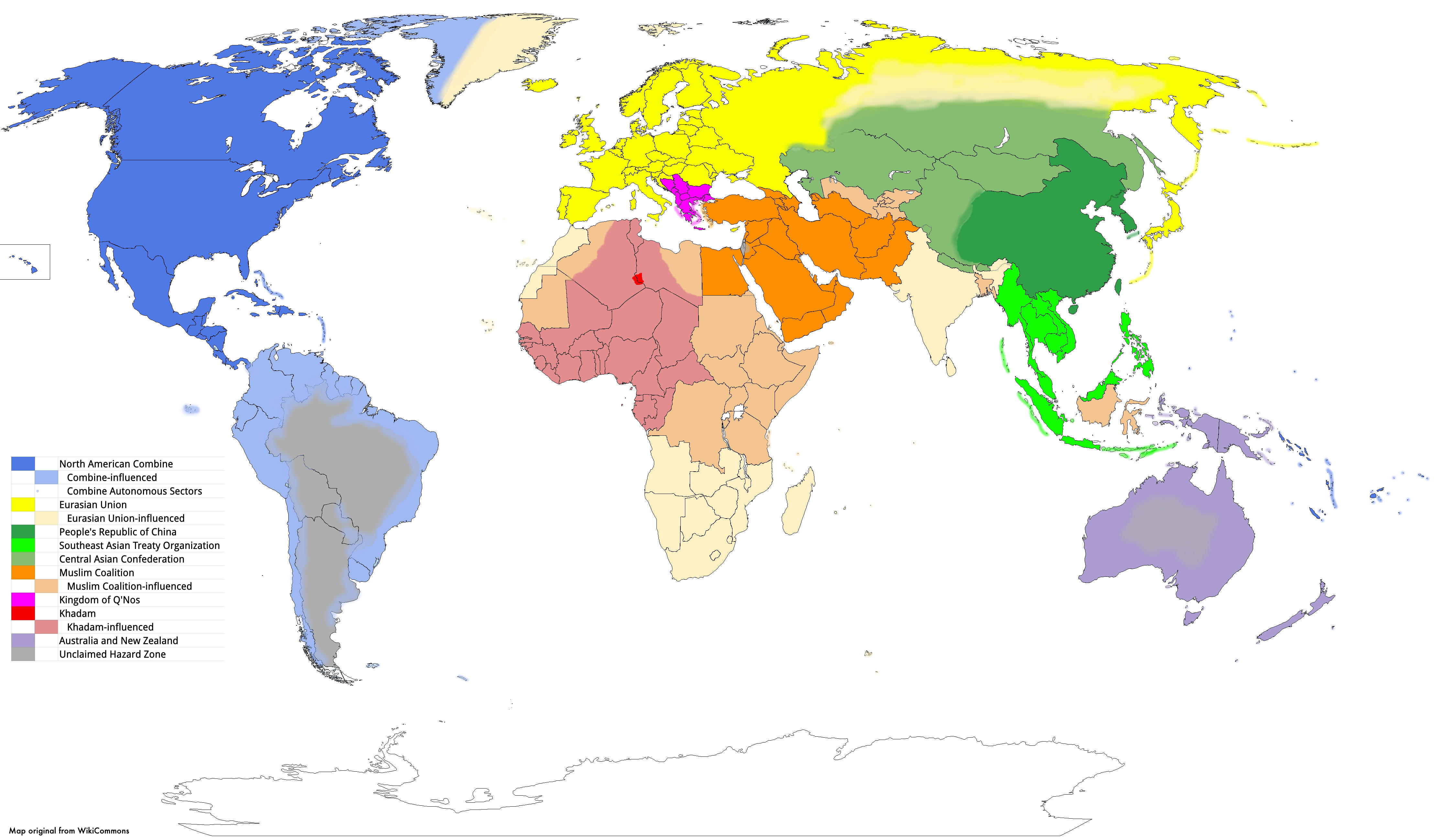
In "Watsonian" terms, between the massive depopulation of 1998 hitting the Global South harder than the Global North, a few nukes and meteor strikes, and the fact that global population really didn't start rebounding until the 2020s, there's just a lot of lines on the map that are unenforced and unenforceable. Jordan technically "won" the West Bank argument, but it's a contaminated wasteland. The old colonial borders in Africa are almost meaningless over much of the continent, with the real political units being however much a local warlord, corporation, or Khadamite enclave can directly control. It is still convenient to say something is in Kenya, but Kenya as a nation hasn't really recovered yet (as seen in Catman, it's doing better than many, but still...). Similarly, while the corporations that run most of the cities remaining in South America pay lip service to the old national laws of whatever country they're in, the real borders are negotiated between companies rather than governments.
 The United World was officially founded in 2018, although its seeds were in
place as far back as the 1990s. It acts in many of the roles the old United
Nations used to fill, but with some differences. The United World does not
yet have a strong military arm, nor does it see internal peacekeeping as a
priority at the moment. Rather, the UW is more concerned with matters that
are more global, such as the internet and dealings with alien powers, both
extraplanetary and extradimensional. While the Planetary Confederation is
still keeping Earth at a very long arm's reach, their official offices are in
the United World complex in Australia.
The United World was officially founded in 2018, although its seeds were in
place as far back as the 1990s. It acts in many of the roles the old United
Nations used to fill, but with some differences. The United World does not
yet have a strong military arm, nor does it see internal peacekeeping as a
priority at the moment. Rather, the UW is more concerned with matters that
are more global, such as the internet and dealings with alien powers, both
extraplanetary and extradimensional. While the Planetary Confederation is
still keeping Earth at a very long arm's reach, their official offices are in
the United World complex in Australia.STRAFE, the Superhuman Tactical Resources and Affiliated Field Experts, is sanctioned by the United World to act against threats that conventional military forces are either too slow to react too or are otherwise not things that armies are good at dealing with. As of 2027, they're still not numerous enough to take the place of a standing army, and they are technically not in the same chain of command as the protectorate armed forces (see below).
As of 2027, the members of the United World are: the North American Combine, the Eurasian Union, the Muslim Coalition, the Central Asian Confederation, the People's Republic of China, and the Southeast Asian Treaty Organization. The Muslim Coalition's membership is always uncertain, and the three parts of the former Chinese super-state are only recent members.
The United World's headquarters are located in Australia, which is a neutral country and UW protectorate. Australia, New Zealand and several Indonesian nations have joined together in an alliance that falls under UW protection. The United World's only real military forces at this point exist to keep this protectorate secure against Khadamite threat. However, the UW can officially call on aid from the Planetary Confederation, a potentially big stick that is rarely invoked.
In theory, the UW has jurisdiction over any territory not formally part of the North American Combine, the Eurasian Union, the Muslim Coalition or one of the three Chinas. In practice, any area shown as "influenced" on the world map is likely to insist that their patron state should be contacted when the UW wants to work inside their borders. It is better to say that the purple areas on the map are all that the UW really influences directly.
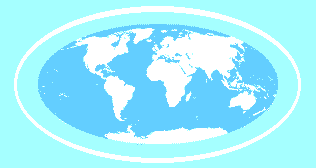
The United World banner is a deliberate reference to the old United Nations flag, but using a different projection of the world map, and a unifying oval rather than a wreath of olive branches. The symbolism is geared more towards unity than peace, as is the UW itself.
 The North American Combine is the strongest economic power in the world of
2027, partly due to the lesser damage it suffered in the wake of the
Godmarket, but mostly because it has no immediate rivals on the ground. The
Eurasian Union must spend considerable resources keeping Khadam, the Muslim
Coalition and Q'Nos out of its territories, and the major powers other than
the Combine and the EU were all hit hard by the events of July 6, 1998
(although China is still reluctant to admit to this fact) and the years
immediately following it. To the extent it has any territorial issues, they
concern the State of Pacific, which currently has the UW Protectorate and
SEATO as neighbors, neither of which is hostile (although some parts of
Pacific may wish to join SEATO or the UW protectorate). Greenland is not
literally split down the middle, this is just a represenation of the fact
that the Combine and EU share it under the remnants of old NATO-era treaties
and simple practical self-interest.
The North American Combine is the strongest economic power in the world of
2027, partly due to the lesser damage it suffered in the wake of the
Godmarket, but mostly because it has no immediate rivals on the ground. The
Eurasian Union must spend considerable resources keeping Khadam, the Muslim
Coalition and Q'Nos out of its territories, and the major powers other than
the Combine and the EU were all hit hard by the events of July 6, 1998
(although China is still reluctant to admit to this fact) and the years
immediately following it. To the extent it has any territorial issues, they
concern the State of Pacific, which currently has the UW Protectorate and
SEATO as neighbors, neither of which is hostile (although some parts of
Pacific may wish to join SEATO or the UW protectorate). Greenland is not
literally split down the middle, this is just a represenation of the fact
that the Combine and EU share it under the remnants of old NATO-era treaties
and simple practical self-interest.The core of the NAC is the three Major States of Canada, Mexico and America. Each is broken up into Sectors that map fairly closely to their pre-unification states or provinces, although some of the more populous states were broken into multiple sectors, such as North and South California Sectors. Constitutional freedoms have been slowly restored over the past two decades after being suspended during the state of emergency at the turn of the 21st Century, but citizens of the Combine still don't enjoy the freedoms they might have had during the 20th Century. For more information, see this file.
The Combine's influence extends into much of South America and the Pacific islands. Most of this territory is nominally under NAC law, but often the true law comes from the corporations which have set up shop in the area. South America is riddled with small corporate feifdoms which resemble upscaled "company towns," with no law but the bottom line. These are slowly being brought into NAC regulation, but it's still something of a wild frontier. South American countries, at least the ones organized enough to have governments that aren't just shells for corporations, are protectorates without voting status, although the Minor States (Pacific, Isthmus, Caribbean) often speak on their behalf in the Senate.
There are two known "Autonomous Sectors" within the State of America: Detroit and Manhattan. Detroit is the older of the two, having been given over to Doctor Developer fairly early in the Combine's official history, while Manhattan is currently administered by Rex Umbrae, who is technically a power broker in Khadam. Realpolitik in action. The relative success of Manhattan Autonomous Sector has gotten some of the South American company towns considering petitioning to become Autonomous Sectors of the nearest convenient Minor State, but so far the Senate has been disinclined to consider such plans.
The flag of the NAC is a combination of the colors of the flags of the three Major States (each retains its original flag as a State flag). The seal of the Combine is an eagle with a shield over its chest, the shield bearing the pattern from the flag.
 Born out of the European Community and the shattered remains of the
Commonwealth of Independent States, the Eurasian Union had to pull together
quickly in the first decade of the century, thanks to a mulitude of enemies
around it and many prospective member states who were ripe for the picking by
powers like Khadam or China. The charismatic Lenard Duvallier managed to
bring the nations together in 2005 as a more economic than political
entity.
Born out of the European Community and the shattered remains of the
Commonwealth of Independent States, the Eurasian Union had to pull together
quickly in the first decade of the century, thanks to a mulitude of enemies
around it and many prospective member states who were ripe for the picking by
powers like Khadam or China. The charismatic Lenard Duvallier managed to
bring the nations together in 2005 as a more economic than political
entity.Economic power quickly translated into political power, as the richer nations started to dictate policy for the poorer nations. A few minor wars were fought with China, resulting in Bangladesh being ceded to China in return for guarantees of Japan's safety and promises not to invade India (Bangladesh largely broke loose when China fragmented and is currently aligned with the Muslim Confederacy, in large part because they resent being traded away by the EU). Some countries joined the EU because they felt that independence was no longer likely and it seemed the least offensive option. With China opening up and matters shifting throughout Eurasia, some of the less influential member states are starting to reconsider their options.
The EU is very pro-United World, although each nation has slightly different reasons for wanting the United World to succeed. Richer nations see it as a path to wider trade and higher profits, while poorer nations hope that they might someday be able to use the UW as a tool to gain greater indepedence from the EU without being gobbled up by hostile neighbors. As the UW approaches its first decade of existence without being shattered, a number of countries in the EU are also pondering joining Australia and the other UW Protectorate nations, a move that might threaten the UW's neutrality.
Unlike the Combine, the Eurasian Union does not have protectorates. A country is a member, or it isn't. Instead, the pale yellow "EU-influenced" nations are those who are very minor members, those whose membership is very uncertain (like Morocco), or places where territory is shared in a nebulous way (Greenland, much of Siberia). The nations in southern Africa have the same very low population density of most of the continent, and their histories make them unenthusiastic members of the EU at best, but none of them has yet made a strong move to break away. If Africa gets its own Duvalier, though, it wouldn't take much to create a Pan-African League of some sort starting with the pale yellow countries on the continent.
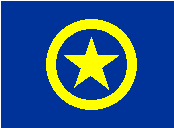
The flag of the Eurasian Union is based on the European Community's banner, which was twelve golden stars in a circle on a navy blue field. The ring of stars has been replaced by a star in a solid ring. Some have joked that the ring represents the gold which keeps the EU together.
 China is...complicated.
China went behind a curtain of silence after the turn of the century, claiming to the outside world that they had suffered no losses from the worldwide disaster, and quickly moving to absorb nearby nations, ironically unifying the halves of Korea in a way neither half liked. Japan's ties to the Eurasian Union kept it safe, and parts of Malaysia were able to remain free of Chinese hegemony by joining the Muslim Coalition. Isolationism, plus bitter memories of the wars of the first decade of the century initially kept China out of the United World. The People's Republic of China controlled an unknown but large fraction of the remaining world population, and was even more inscrutable than it had been in the days of the "Bamboo Curtain."
A large part of this insularity was due to the Premier, who both desired the isolation and did most of the work to enforce it in a world that was slowly regaining superhumans and their gifts. China's Premier was perhaps the world's most powerful Anchor, able to suppress supernatural powers over the entirety of the People's Republic. As nations fell into Chinese control, the Anchor Effect extended over them, aided by specially-recruited Anchors who patrolled the fringes of Chinese territory. Even incompletely assimilated places like Singapore were hazardous places for anyone relying on superpowers or even supertech.
In July 2023, the first holes were put in the curtain, when Devastator arranged for the nuclear destruction of Beijing, claiming that it would ultimately preserve life on Earth (an uncharacteristic motivation for the man who spent his life trying to eliminate humanity, to be sure). Due to his manipulations, most of the core of the government and many of its Anchors died all at once, and only massive cultural and bureaucratic inertial prevented an immediate collapse. Fortunately, Devastator also made sure everyone who mattered knew it was him, so China did not launch retaliatory nuclear strikes on other nations.
A year after the destruction of Beijing, China had largely settled down and gotten its public face in order, with a seemingly unified government continuing to maintain a policy of isolationism. In fact, however, dozens of minor rebellions flared up every month, stamped out with ruthlessness or co-opted by one of the politicians seeking to carve out his own kingdom. Behind the new Bamboo Curtain, China was in chaos, and it was only a matter of time before the secret wars became public.
Two years after the destruction of Beijing, the People's Republic finally lost its battle to keep its internal divisions secret. Two new political entities announced their existences to the world: the Southeast Asian Treaty Organization (SEATO), and the Central Asian Confederation (CAC). The People's Republic of China shrank to something approximating its 20th Century borders, losing Mongolia and some western provinces but keeping Taiwan and the Korean peninsula. All of the other 21st Century gains in Southeast Asia splintered off into SEATO, in a split that was shockingly peaceful as far as the outside world could tell. Known only to a handful of highly placed people, all three pieces of China were effectively ruled by a triumvirate who had decided to split the territory as part of an experiment in social engineering...which way was the best way to rule? Premier Niu of the reduced People's Republic started moving towards China's ancient traditions as a guide, staying nominally communist but with a more Taoist flavoring. He has started normalizing relations with the rest of the world, and along with SEATO and the CAC has joined the United World.
China's flag is the same as it has been since 1949, a red banner with five gold stars. On the scale of human lives, that is sufficiently deep tradition for Niu's purposes.
Despite aggressive Chinese policies of intermixing populations, the nations that broke away to form SEATO generally do not have significant ethnic Chinese populations, being a mix of Vietnamese, Cambodian, Laotian, Malay and other ethnic groups that have clung to their cultural identities in the face of assimilationist doctrine.
As the name implies, this is a coalition rather than a single nation. The specific name SEATO was deliberatly chosen in an attempt to curry favor from the North American Combine, whose American state had been behind the original SEATO's formation. Most citizens of the member nations don't like the Combine much more than they do China, but they figure that they can play the giants against each other and remain free. It is a dangerous game they play. SEATO has recently joined the United World, and tends to vote with the Combine. Some of its member states need constant convincing to stay in, and not join the UW Protectorate next door, and a few would like to join the Muslim Coalition instead. As a result, SEATO is easily the weakest of the three successor states of China, despite their relatively high populations and economic strength.
Despite two years to wrangle over the matter, SEATO does not have an official flag yet, but the member nations have revived their TwenCen flags. In the case of Vietnam's flag, they did eventually revert to their pre-colonial flag, to further distance themselves from China. Some argue that a SEATO flag would defeat the purpose of being a group of independent nations and start to subsume national identities into the super-state. (They technically can't use the 20th Century SEATO flag due to intellectual property laws.)
 Like SEATO, the Central Asian Confederation contains several nations that
were conquered by China in the 21st Century, but unlike SEATO it managed to
break off territory claimed by China in the 20th Century as well, including
actual provinces of "China proper." Khazakstan, Outer Mongolia, and western
parts of China form the bulk of its land area, with Nepal, Bhutan, and Tibet
rounding out most of the rest. The disputed Kashmir region has joined as
well, and the lack of conflict lends credence to the rumors that India itself
is being courted for membership. Khazakstan's southern neighbors are also
weighing their options, because while they're not actually under threat from
China anymore, many of their citizens feel the CAC would treat them better
than the Muslim Coalition has.
Like SEATO, the Central Asian Confederation contains several nations that
were conquered by China in the 21st Century, but unlike SEATO it managed to
break off territory claimed by China in the 20th Century as well, including
actual provinces of "China proper." Khazakstan, Outer Mongolia, and western
parts of China form the bulk of its land area, with Nepal, Bhutan, and Tibet
rounding out most of the rest. The disputed Kashmir region has joined as
well, and the lack of conflict lends credence to the rumors that India itself
is being courted for membership. Khazakstan's southern neighbors are also
weighing their options, because while they're not actually under threat from
China anymore, many of their citizens feel the CAC would treat them better
than the Muslim Coalition has.
The CAC is largely held together due to the efforts of an extremely charismatic woman who calls herself the Western Dragon. She is rumored to be a supernormal. The structure is simultaneously a loose confederacy and a strong social movement focused on individual freedom and self-determination, a rather egalitarian ideal for people who have lived for decades under autocracies and theocracies. No one who seriously examines the CAC's structure can avoid being quite concerned with where it might be going, since historically there have rarely been good ends for cults of personality, even well-meaning ones.
The flag of the CAC is a simple green banner, six times as long as it is wide, with gold tassles at the end.
 Note, this state is also called the Muslim Confederacy, the Muslim
Confederation, and even the Muslim Alliance. The actual term used does not
translate precisely, and those in the MC are disinclined to help outsiders
feel comfortable by picking an official translation.
Note, this state is also called the Muslim Confederacy, the Muslim
Confederation, and even the Muslim Alliance. The actual term used does not
translate precisely, and those in the MC are disinclined to help outsiders
feel comfortable by picking an official translation.The deaths of all those who followed pagan gods in 1998 ignited a renewed fervor in the "major" world religions (which had been getting dangerously marginalized in the late 1990s), and Islam was no exception. A short and bloody war with Israel resulted in the "Holy Land" being reduced to radioactive ruin, and much of the Jordan was destroyed by fallout. The Muslim Coalition arose out of the alliance to fight Israel, but stayed together to help promote Islam and recover from the war.
While the individual nations originally ranged from total theocracy to democracy, the surviving core Coaltion members joined in a single Theocracy, rule by holy men. Considered socially oppressive by other nations, it is nonetheless a stable system...especially since many of those who might have dissented died in 1998 or shortly after.
The brief war against Q'Nos has brought the Coalition closer together in some ways, but this has also thrown their differences into sharper contrast, and outside observers tend to think something is going to have to give. Either the Coalition will loosen, or it will fracture along doctrinal lines. However, with both Q'Nos and Khadam poised to pick up any pieces, an outright civil war looks too much like a suicide pact to be taken as a serious option.
MC-influenced nations are nominally members of the Coalition, but are those who joined after the war with Israel. As such, they are not considered as having as much skin in the game, and are akin to "minor states" in the North American Combine. They have a say, just less of one. And if they are threatened by neighbors, the core nations are less likely to risk much on their behalf. Several culturally Islamic nations simply never joined, because it didn't seem to be to their benefit. For instance, Morocco and Western Sahara prefer to be lesser members of the EU than lesser members of the Muslim Coalition. Algeria and Mauritania joined soon after the Coalition formed, in the hopes that it might save them from Khadam's encroachment, but the intervening years have proven that to be a false hope, and if they don't fall completely under Khadam's control soon, it will be because they appealed to the EU.
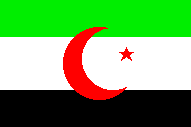
The flag of the Muslim Confederation is not a fixed banner, but always involves Islamic elements, such as the crescent moon. Pictured here is one of the more common designs.
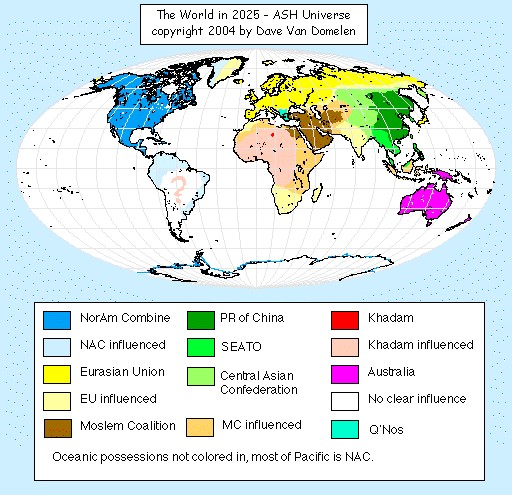
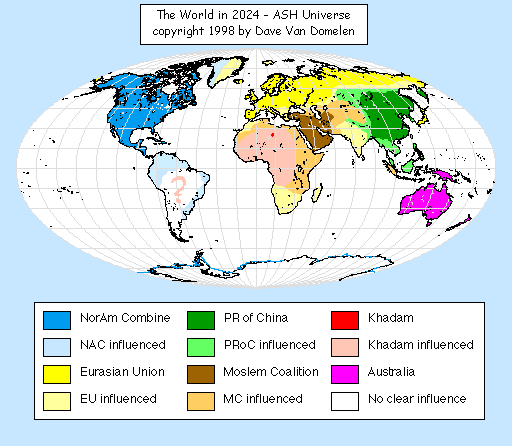
Important note: For much of my life I was under the mistaken impression that "Moslem" was the preferred spelling and that "Muslim" was somewhat insulting, only to later discover I had it exactly backwards. I apologize to any who I may have offended through ignorance. "Moslem" will still appear in older works and older image files such as 2024 and 2025 maps linked the top of this page, but going forwards I will attempt to keep from repeating my mistake.
 Khadam is actually a fairly small city-state, located at about 10 degrees
East longitude, 25 degrees North latitude, at the site of the older city of
Ghat in Libya. It is ruled by a council that is a mix of the original
Technomancers and representatives of the alien Pranir trading houses, and is
very much an authoritarian state. The average citizen is lucky if he's not
used as fodder for experiments or sold for his organs to the Pranir
organleggers. Still, people flock to Khadam for that one chance in a
thousand of hitting the jackpot and finding good work, as a security guard or
lab assistant or whatnot. Mercenaries make up a large part of the population
of this black market spaceport.
Khadam is actually a fairly small city-state, located at about 10 degrees
East longitude, 25 degrees North latitude, at the site of the older city of
Ghat in Libya. It is ruled by a council that is a mix of the original
Technomancers and representatives of the alien Pranir trading houses, and is
very much an authoritarian state. The average citizen is lucky if he's not
used as fodder for experiments or sold for his organs to the Pranir
organleggers. Still, people flock to Khadam for that one chance in a
thousand of hitting the jackpot and finding good work, as a security guard or
lab assistant or whatnot. Mercenaries make up a large part of the population
of this black market spaceport.Khadam's influence ranges over most of Africa and scattered enclaves in South America's hazardous interior and even Antarctica. The products of their genetic experimentation make such areas dangerous to be in, and have slowed the encroachment of other powers into the Sahara and subsaharan jungles. Several lesser Pranir houses have established their own spaceports in Khadam-influenced areas for the purpose of offloading cargo that's too nasty even for Khadam's loose standards. The pink parts of the map are technically also hazard zones, they're simply ones that have been claimed.
While technically still part of the EU, the Principality of Monaco is effectively aligned with Khadam. The EU has chosen to treat this in the same way that the Combine deals with "Autonomous Sectors".
Derek Radner, aka Triton, is currently the Chancellor of Khadam, having displaced the last of the Zugmann heirs. The Conclave of Super-Villains helps him retain power, but it also helps that several of the formerly ruling factions were weakened significantly during a series of internecine conflicts in 2023-4.
Khadam's flag was designed to vaguely remind one of the Nazi banner without being immediately recognizable as such, since the nation was founded by an expatriate Nazi (see Academy #1).
 The newest of the major world powers, this kingdom is ruled by an ancient
Pureblood named Q'Nos. Q'Nos lost most of his power in struggles with other
Purebloods and was "demoted" to the status of demigod, and further humiliated
by his defeat in the 1990s at the hands of Solar Max I. Freed by Solar Max
II, he set about building an army out of the mythical creatures in the
twisted wastelands of what once was Greece (aka "Shattered Hellas"). During
a brief war with the Muslim Coalition, he lost much of his mystic power to
the leader of their supernormal cadre, but the war was only a smokescreen
covering his attempt to summon up his mother, the Leviathan. He remains a
potent foe on the battlefield, but has shifted his efforts to global
diplomacy and the power represented by the now mostly-united "monsters" that
once roamed Shattered Hellas.
The newest of the major world powers, this kingdom is ruled by an ancient
Pureblood named Q'Nos. Q'Nos lost most of his power in struggles with other
Purebloods and was "demoted" to the status of demigod, and further humiliated
by his defeat in the 1990s at the hands of Solar Max I. Freed by Solar Max
II, he set about building an army out of the mythical creatures in the
twisted wastelands of what once was Greece (aka "Shattered Hellas"). During
a brief war with the Muslim Coalition, he lost much of his mystic power to
the leader of their supernormal cadre, but the war was only a smokescreen
covering his attempt to summon up his mother, the Leviathan. He remains a
potent foe on the battlefield, but has shifted his efforts to global
diplomacy and the power represented by the now mostly-united "monsters" that
once roamed Shattered Hellas.In the wake of his failure to conquer the world, Q'Nos retrenched and started planning for long term power, making his kingdom a refuge for misfits and freaks from around the world (a move that briefly caused tensions with Khadam). The revelation that Venus's terraforming was the result of his mother's banishment to that world has caused him to claim the entire planet as his birthright, and Khadam has openly supported this claim in exchange for considerations. Where this will go has yet to be revealed as of 2027, especially since the planet itself has a voice and may not want to be ruled by anyone else.
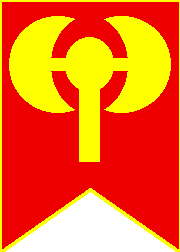
Q'Nos's banner is the golden double-headed axe, or labris. He wields such an axe, coated in mystically-created Collapsauron, or hyperdense gold.